Advanced Material Technology in Low Voltage Power Cables
Low voltage power cables are a vital component of modern infrastructure, seamlessly powering industrial, commercial, and residential systems. These essential cables require advanced material technologies to optimize performance, safety, and durability. Here, we explore four innovative materials and techniques that set industrial power cables apart, ensuring maximum efficiency and reliability for diverse applications.
Table of contents:
Cross-Linked Polyethylene (XLPE) Insulation for 90°C Continuous Operation
Oxygen-Free Copper Conductors Minimizing Energy Loss (1.5–800mm² Range)
Anti-Corrosion Steel Wire Armoring for Underground Installation
Dual-Layer PVC Bedding for Moisture and Chemical Resistance
Cross-Linked Polyethylene (XLPE) Insulation for 90°C Continuous Operation
One of the most significant advancements in cable insulation is the use of Cross-Linked Polyethylene (XLPE). Unlike traditional thermoplastic insulation, XLPE is a superior option for low voltage power cables as it withstands high temperatures of up to 90°C during continuous operation. Its molecular structure has been chemically altered to ensure durability, thermal resistance, and minimal deformation under load. XLPE insulation also exhibits excellent electrical properties, reducing cable losses and providing improved dielectric strength. This makes XLPE an industry-standard material, particularly for high-performance applications requiring durable and heat-resistant cables, giving an edge to power cable manufacturers focusing on cutting-edge solutions.
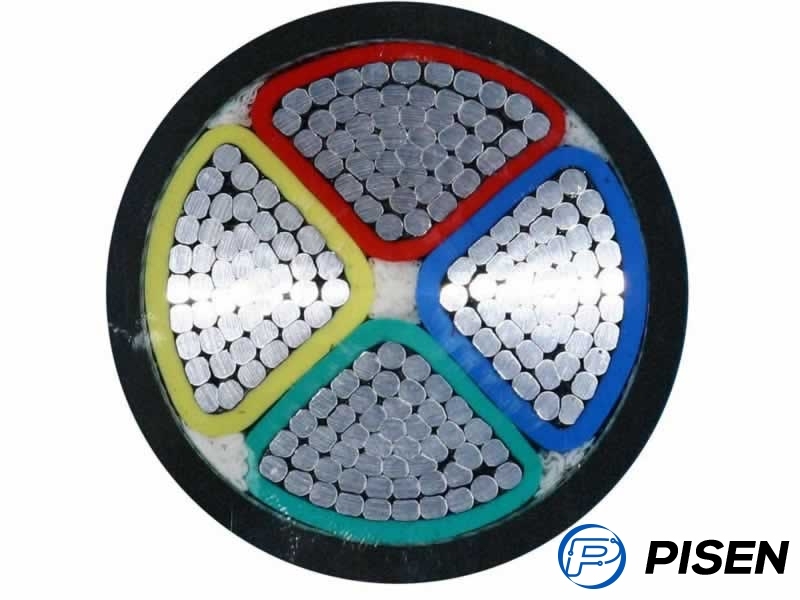
Oxygen-Free Copper Conductors Minimizing Energy Loss (1.5–800mm² Range)
High voltage power cable manufacturers recognize the crucial role conductors play in ensuring efficient power transmission. Oxygen-free copper (OFC) conductors have emerged as the gold standard due to their outstanding conductivity and minimal energy loss. By eliminating oxygen and impurities from the fabrication process, OFC achieves superior electrical conductivity compared to conventional copper wires. This technology enables industrial power cables to minimize resistive heat generation, ensuring stable, energy-efficient performance. Manufacturers now provide OFC conductors in a wide range of sizes, from 1.5 mm² to 800 mm², making these cables suitable for a variety of installations, from small-scale consumer applications to large industrial networks.
Anti-Corrosion Steel Wire Armoring for Underground Installation
Underground power cables face unique challenges, including exposure to moisture, pressure, and potential mechanical damage. To meet these demands, the inclusion of anti-corrosion steel wire armoring (SWA) has revolutionized cable design. SWA provides exceptional mechanical protection, safeguarding the cable from physical impacts during installation and operation. Additionally, the steel wires are treated with anti-corrosion coatings, ensuring a long lifespan even in harsh environmental conditions. This innovation enhances the cable's versatility, allowing it to be used in both rural installations and urban infrastructure projects. The robust combination of strength and corrosion resistance solidifies SWA-armored cables as an ideal solution for power cable installations in challenging environments.
Dual-Layer PVC Bedding for Moisture and Chemical Resistance
Protecting cables from external environmental effects is crucial for maintaining their functionality and longevity. Dual-layer PVC bedding is an advanced solution that offers excellent resistance to moisture, chemicals, and mechanical abrasions. The first layer of the PVC sheath serves as an airtight barrier, preventing water ingress and protecting internal components from oxidation and damage. The second layer enhances chemical resistance, safeguarding the cable against acids, oils, and other potentially harmful substances commonly present in industrial settings. This combination provides low voltage power cables with enhanced durability, ensuring optimal performance under varying conditions. Dual-layer PVC-covered cables are also designed to withstand a wide range of temperatures, making them a reliable choice for diverse applications.